On Saturday, April 11, the Sisters of Mary of the Nazareth Province wished to honor our Mother and Queen at her National Shrine, within the framework of the 100th anniversary of their foundation.
From Shrine to Shrine
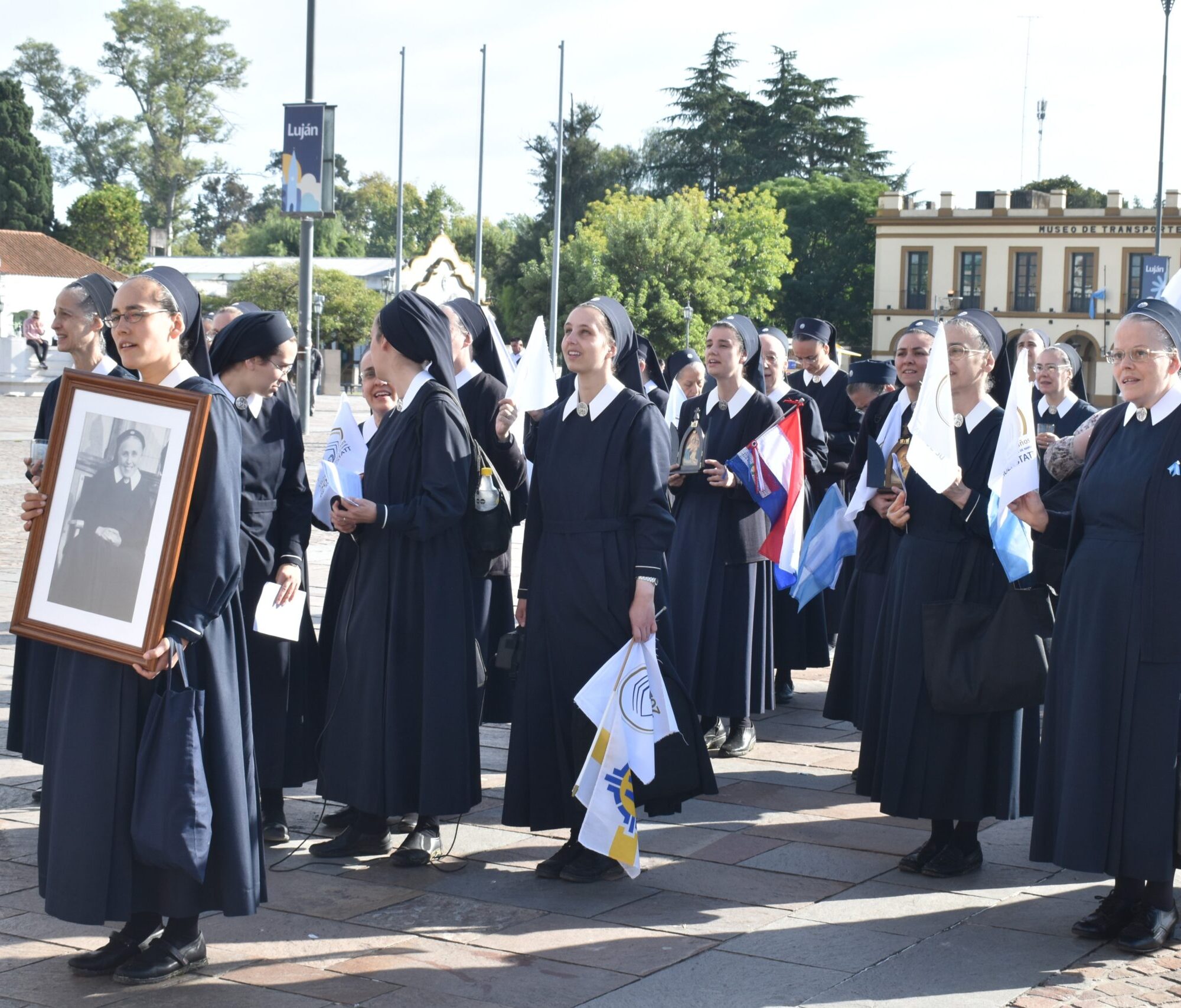
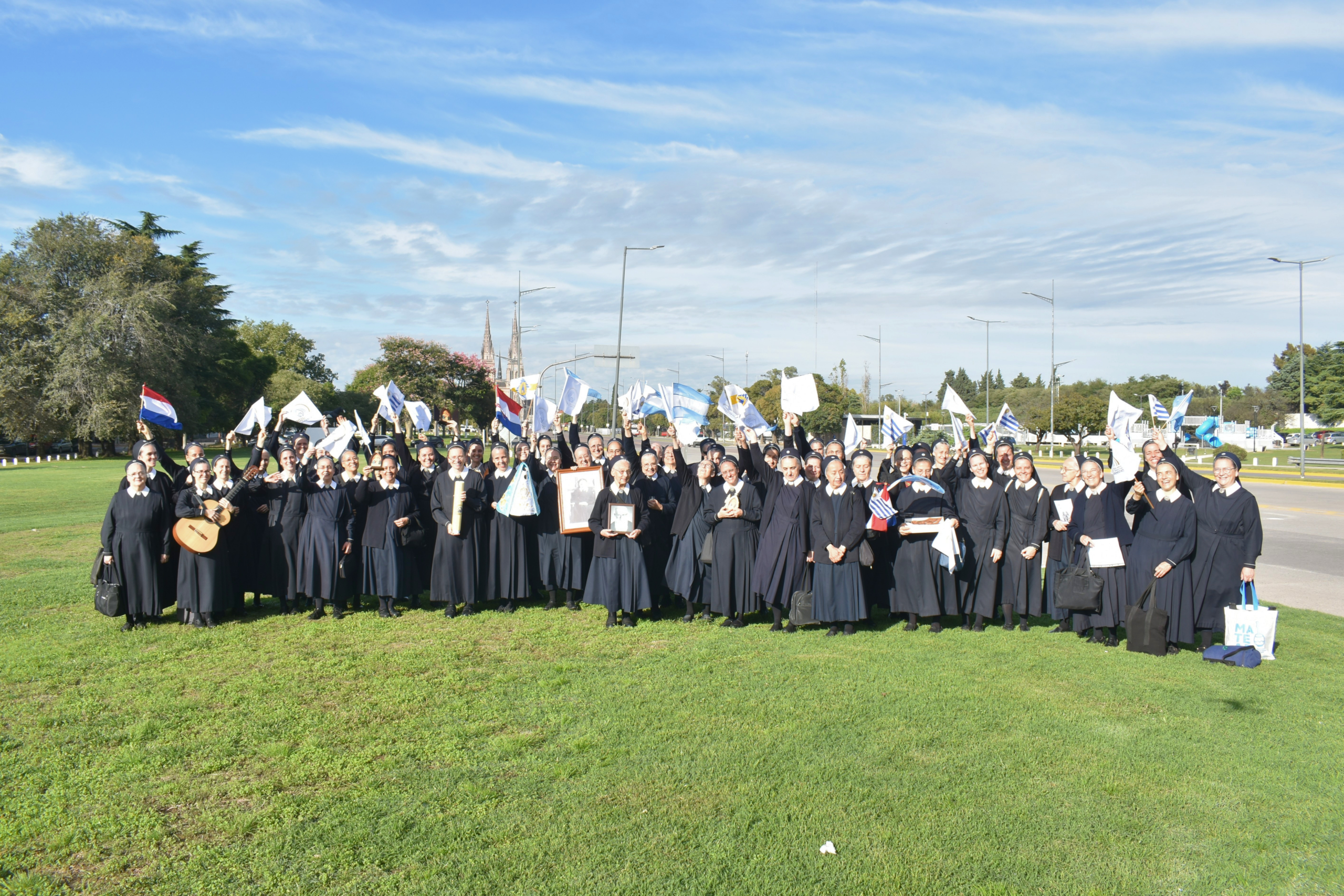
Very early we set out on our journey toward Luján. We wanted to unite shrine with shrine, departing from Nuevo Schoenstatt and from our centers in Buenos Aires, converging—about seventy sisters—on the avenue leading to the Basilica. In this way, we took up the mission entrusted to us by our Father and Founder: he said precisely in Luján, during his first visit to the National Shrine on Monday, June 9, 1947: “Our shrines must bring life to the national shrines of the various countries.”
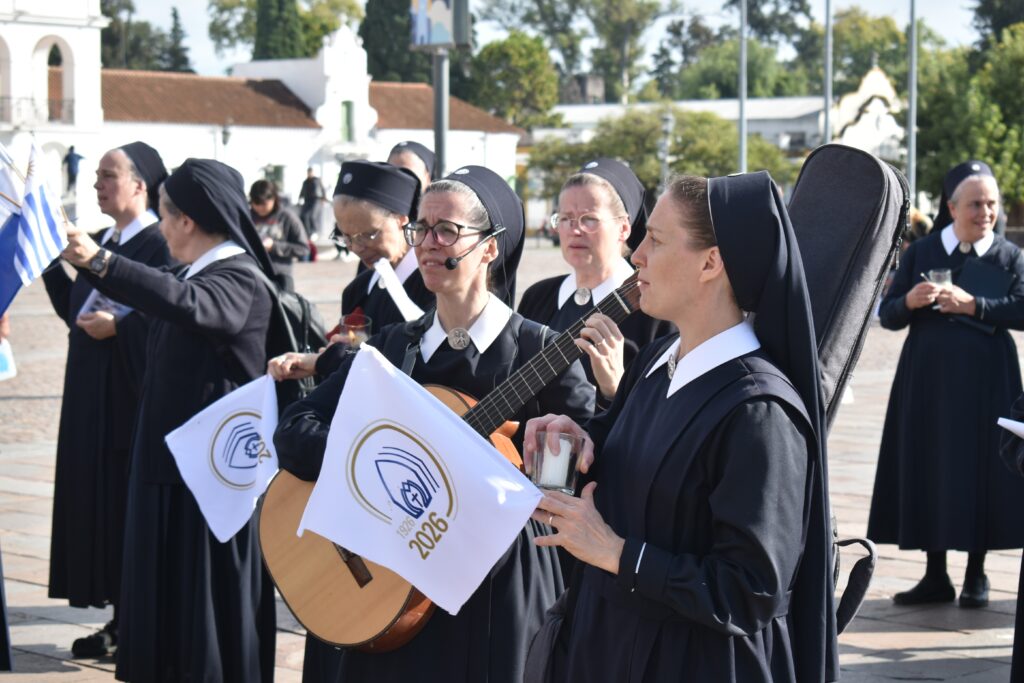
Pilgrims toward our great common home
What better way to arrive at the National Shrine, to the Patroness of our paths, than walking step by step over that sacred land that Mary herself passed across in her nightly journeys?
The morning dew still accompanied us, and the freshly cut grass clung to our shoes, along with dust and moist earth.
How could we not think then of the little Virgin whom the young Manuel would find in the mornings with her dress damp and burrs from the countryside caught in the fabric?
A covenant that includes a very special exchange
So many times we have heard about the exchange of hearts with our Mater ter Admirabilis in the shrine. In the consecration prayer, we give Mary everything that is ours, and she in turn gives us everything that is hers.
In preparing for this pilgrimage, in this prayer so dear to us—and to all Schoenstatt members—we heard the echo of that memorable phrase of young Manuel: “I belong to the Virgin, nothing more,” through which he gave himself as her “instrument and possession.”
And with it being April 11, on the eve of the anniversary of our Father and Founder’s childhood consecration, we consciously entered into that hour of covenant in which Catalina Kentenich entrusted her son to the Heavenly Mother, and the child consciously embraced this covenant.
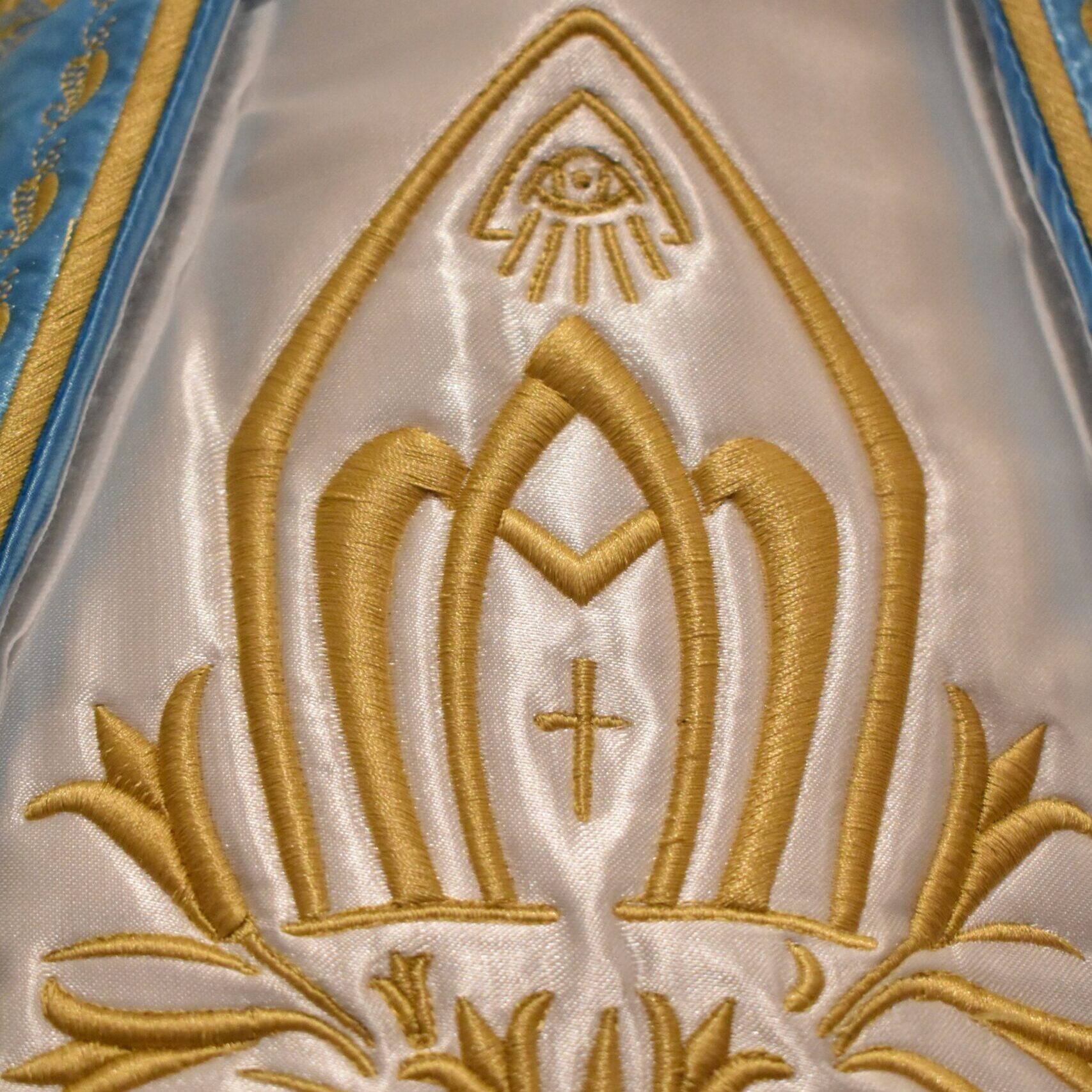
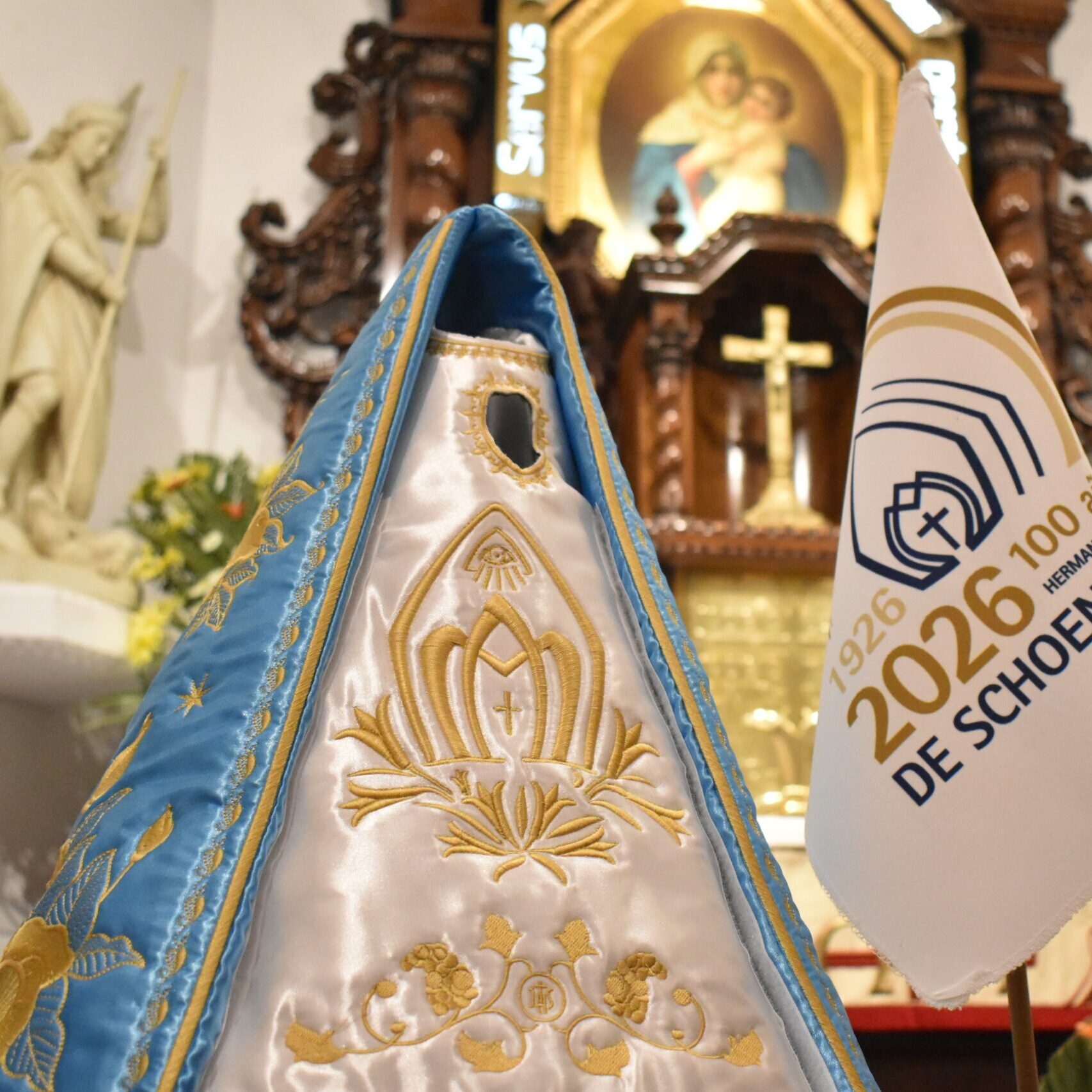
This year, as we celebrate the centenary of our foundation as Sisters of Mary of Schoenstatt, we were able to carry out a very meaningful gesture made possible by small open doors: not only could we once again offer her all that we are and have, but we also very consciously gave her a new dress for her pilgrim image at the Shrine of Luján.
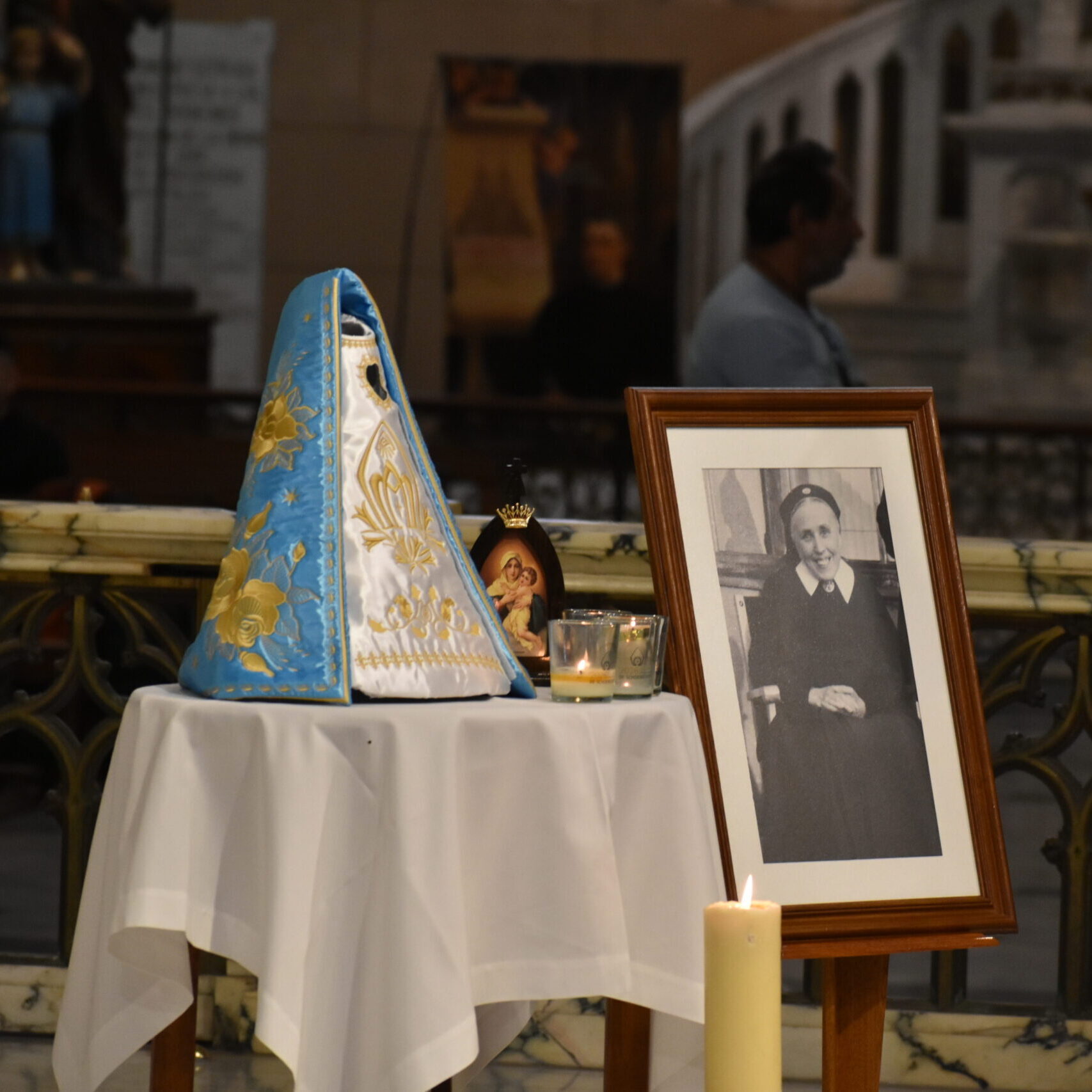
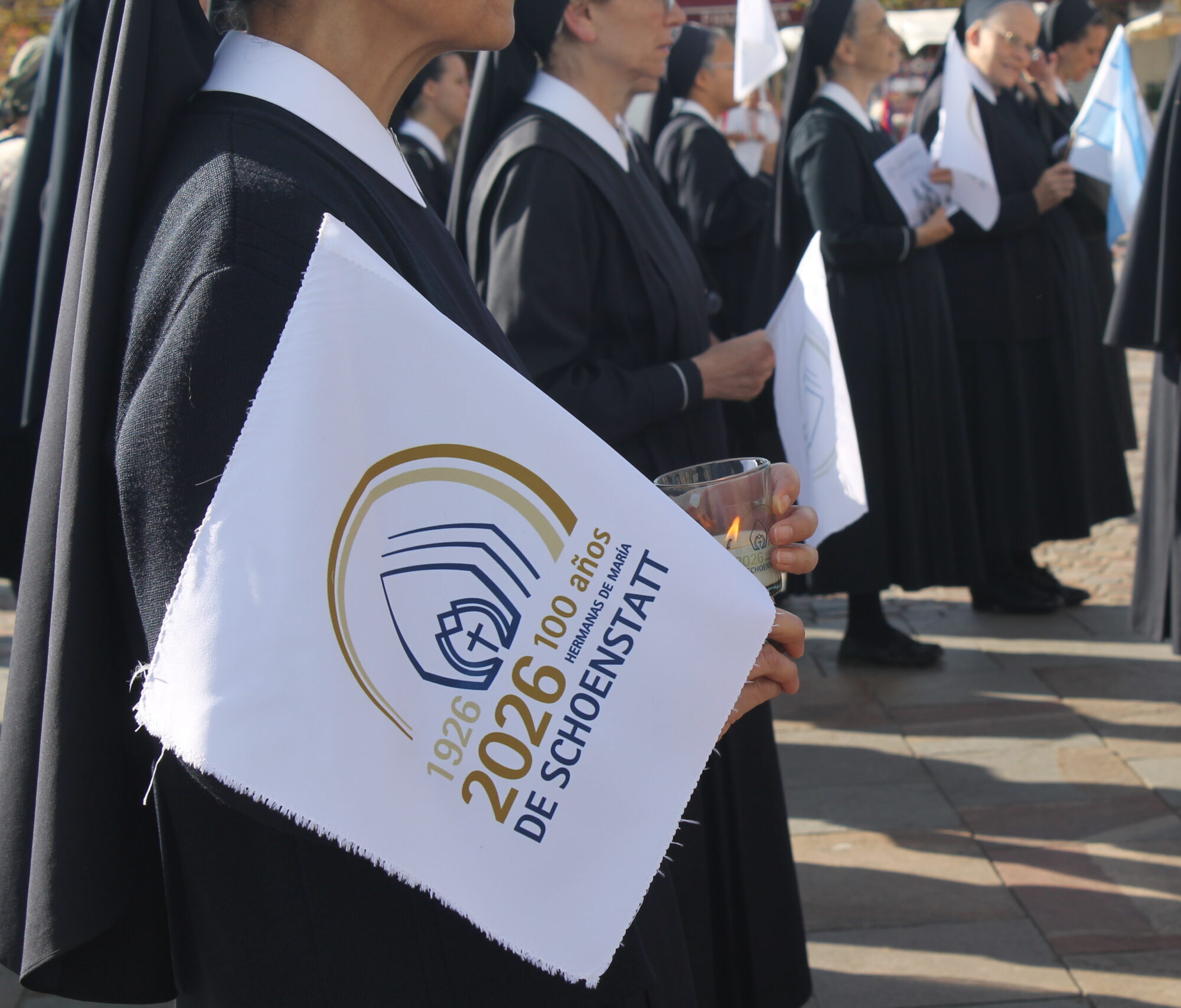
It was a beautiful sign of Providence that we were able to present her new and beautiful dress, made by the Carmelite Sisters who live next to the shrine. It bears an embroidered symbol that identifies us: the shrine with the symbol of the Father; inside, the initials MTA with the cross integrated into it, as expressed in the monogram we wear on our veil, and lilies guarding the shrine.
Mary, on her part, confirmed our mission to be her living presence in the world. We continue to offer her our feet so that she may walk through us on today’s paths; our hands so that she may continue healing the wounds of the soul; our hearts so that she may continue to give mercy in a world that often lives exposed and vulnerable.
But we also want to return from our tasks bringing in our blessed garment the burrs, the dew, and the dust of the path traveled, just as happened with the sacred mantle of Our Lady.
Thus, the exchange “dress for a dress” is a beautiful expression of the Covenant that unites us inseparably with her and allows us to be that light of hope for which the world longs.
A solemn celebration, in keeping with the historic event
We had the great gift of participating in the Holy Mass at 11:00 a.m., presided over by Bishop Jorge Esteban González, auxiliary bishop of the Archdiocese of La Plata and member of the Federation of Schoenstatt Priests.
To our surprise, he invited us to lead the entrance procession with him; in this way, an endless line of sisters crossed the entire basilica to the amazement and overflowing joy of the faithful participating in the celebration.
In his homily, among other things, Monsignor González expressed:
“Only a few years after the birth of the Schoenstatt Movement in Germany (…), Fr. Joseph Kentenich sought full-time collaborators. His desire was to create ‘an autonomous and independent women’s movement’ in which women ‘take the reins.’ Thus, on October 1, 1926, 18 young women offered themselves to carry out this task. Despite the uncertainty of the postwar period, they left their professions. They began in the most absolute poverty, but with the enthusiasm and idealism necessary to be the seed of a new kind of community. In their vocation for Schoenstatt as a lay movement, they wanted to live a life consecrated to God similar to that of religious orders, but with the rhythm of life and the spirituality of the laity. Something new for the Church before the Council; there was not yet space in its structure for this type of community, and there was no certainty that the venture would succeed. However, only five years after their foundation, in 1931, they were already present in about forty places in Germany. Pope Pius XII would recognize the form of life of ‘secular institutes’ in 1947, and then they would become the first German secular institute. As we can see, God never ceases to surprise us… when a work comes from His Providence, the smallness of the instruments, the trials or difficulties they must go through, do not matter.”
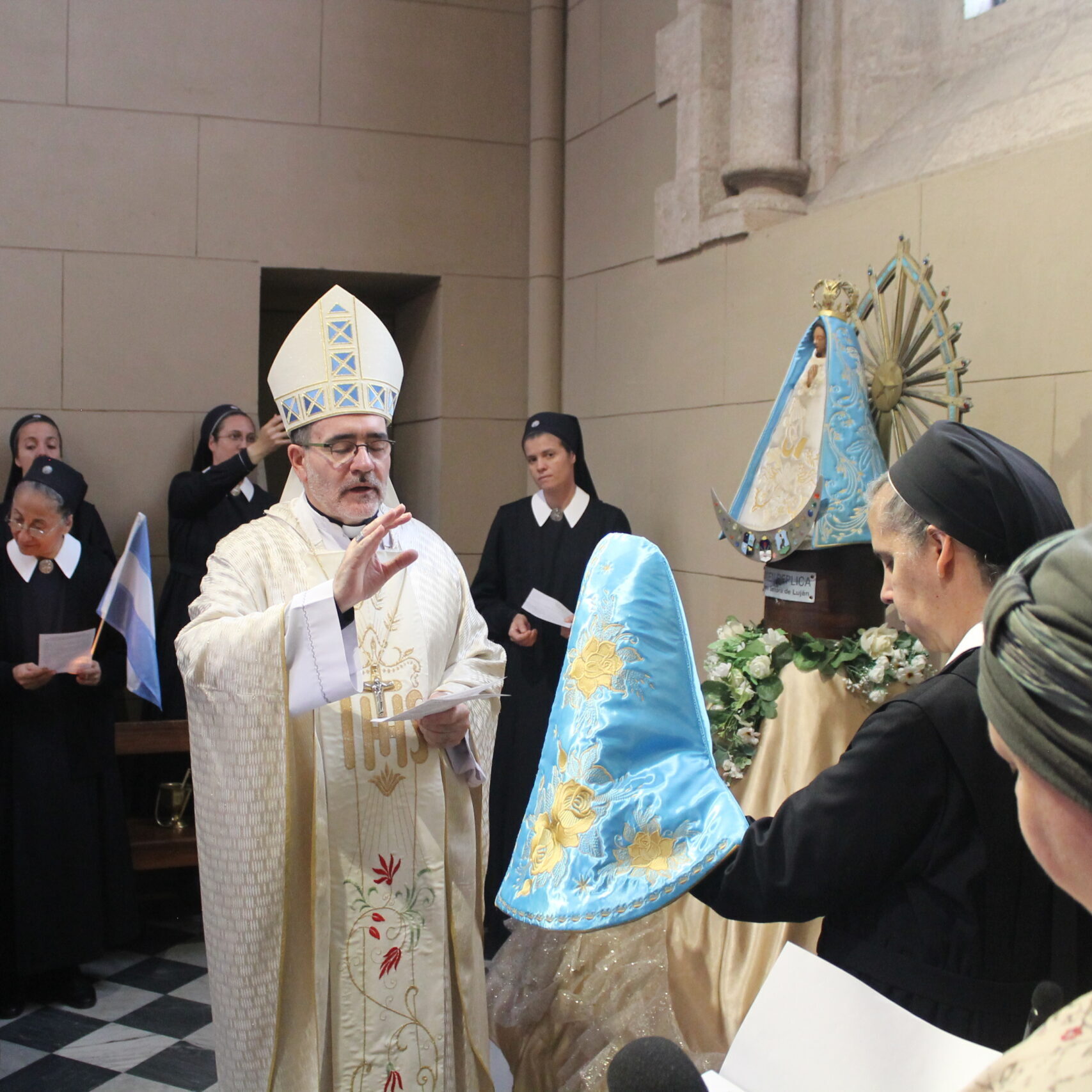
During the offertory, Sister Lourdes María López Manzur (26), accompanied by Sister Miriam Schegg (93), presented the list of the names of all the sisters of the Nazareth Province. The bishop received it and placed the sheet beneath the new mantle, symbol of our offering, already prepared to clothe the “pure and Immaculate Conception.”
Thus Providence allowed us to seal with this gesture the motto that inspired our pilgrimage:
“Mary, light of hope, under your mantle, renew our ‘yes.’”
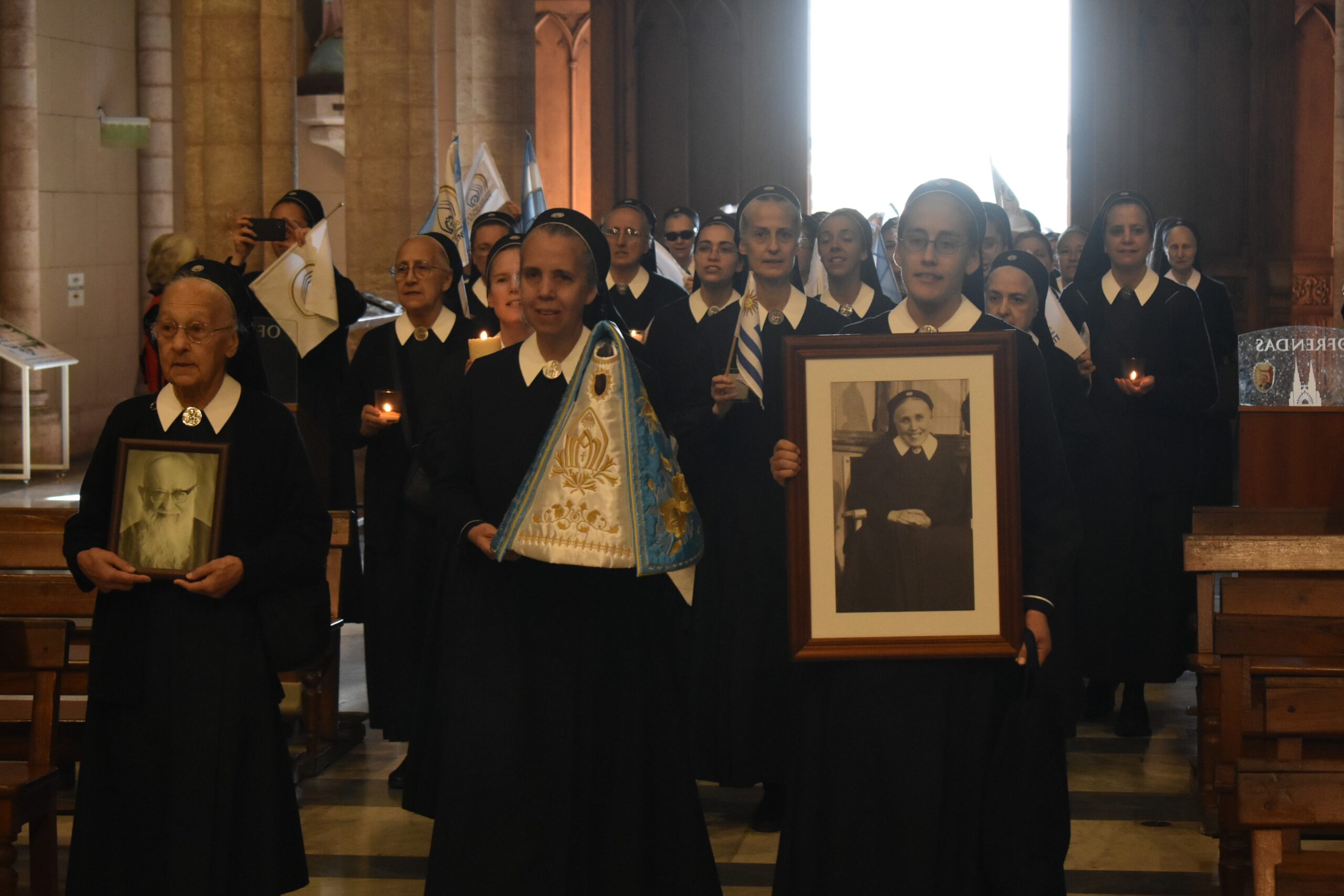
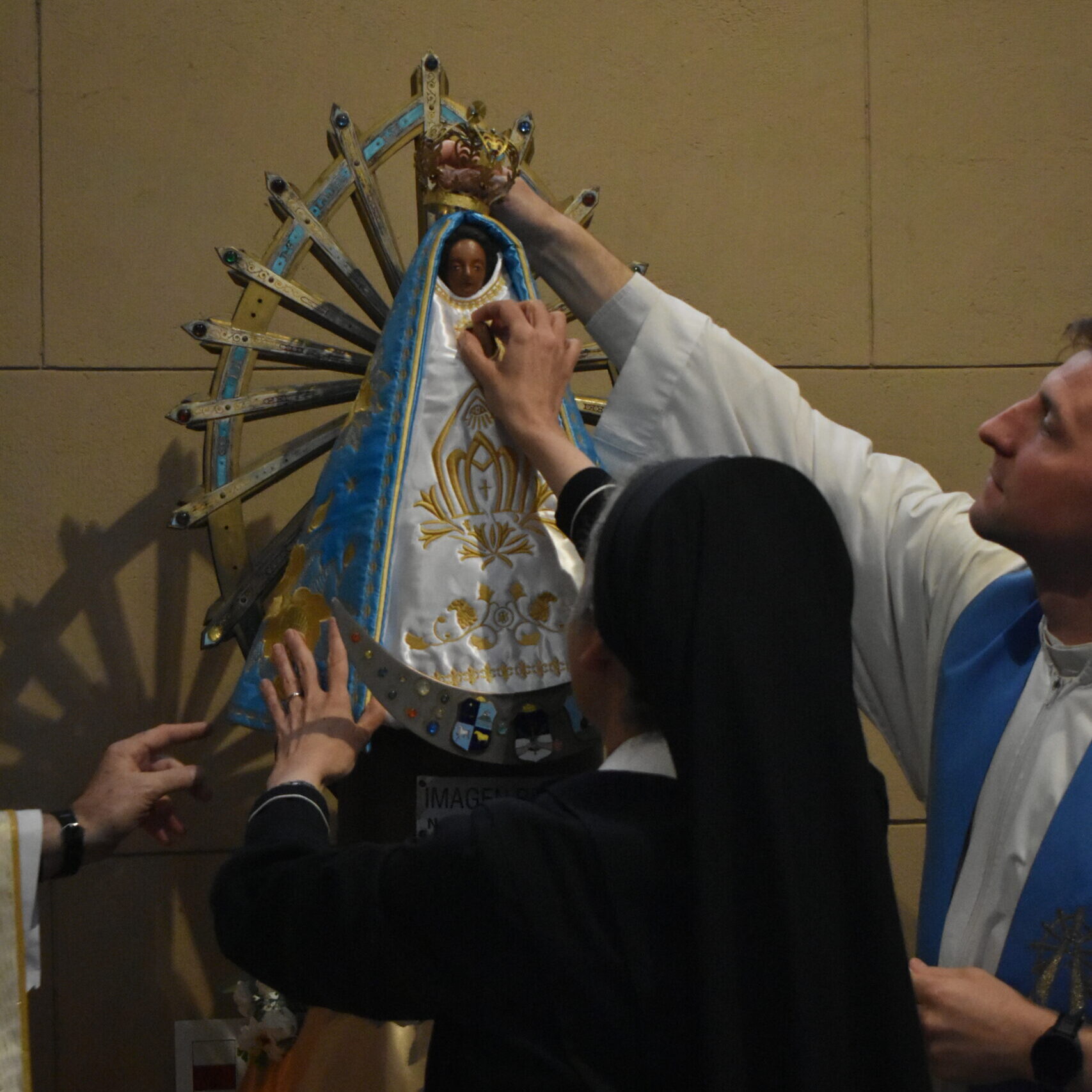
At the end of the Holy Mass came the long-awaited moment of replacing the dress that the Virgin had worn throughout the past year—marked and worn by the passage of pilgrims and the traces of countless hands that, over the course of the year, had rested upon the fabric in thanksgiving, in supplication…
The bishop, assisted by Sister Cecilia María Flecha Cosp, Provincial Superior of the Sisters of Mary, and the Rector of the Shrine of Luján, Father Lucas García, carried out the change of dress. With a beautiful prayer prayed by all the sisters, we closed that unforgettable moment.
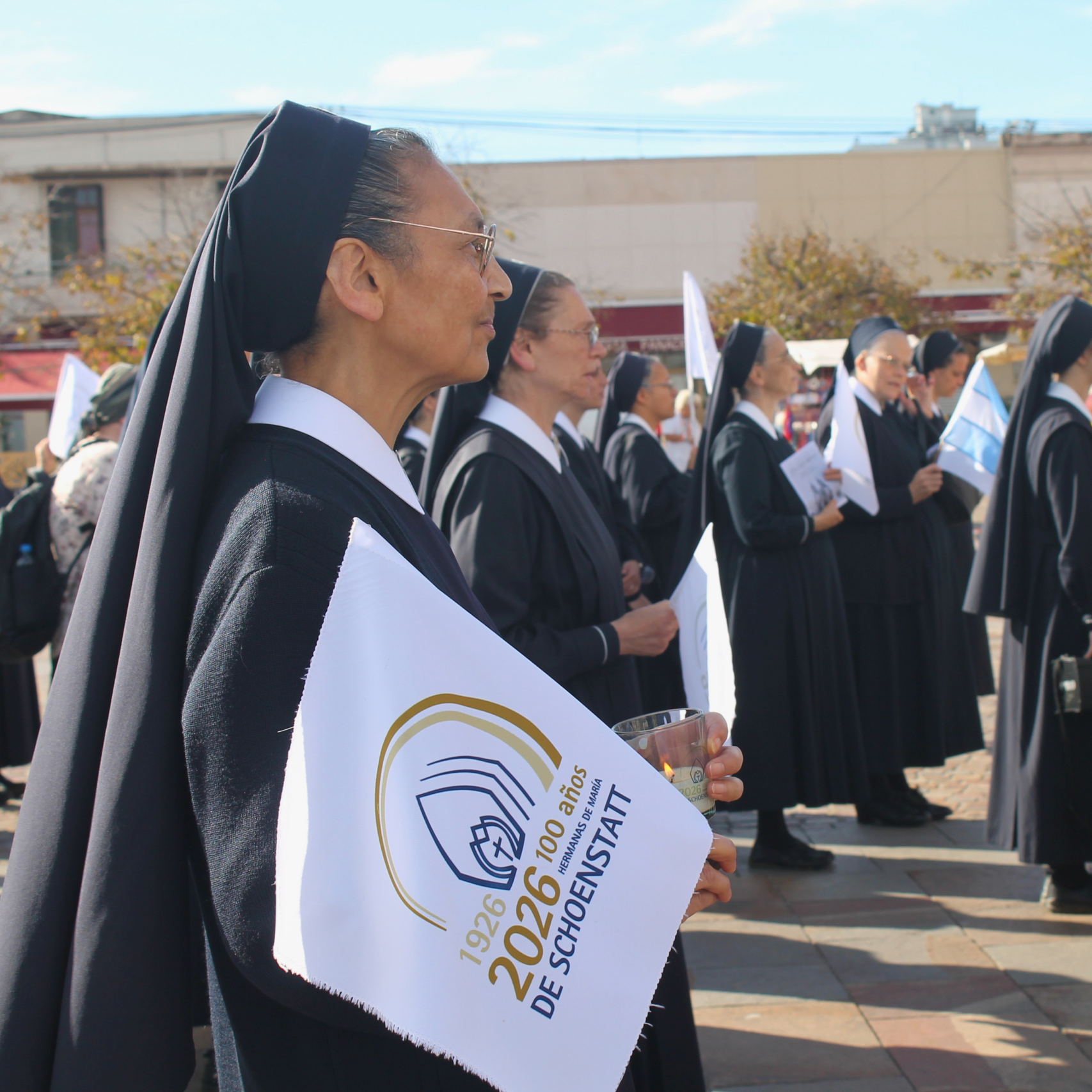
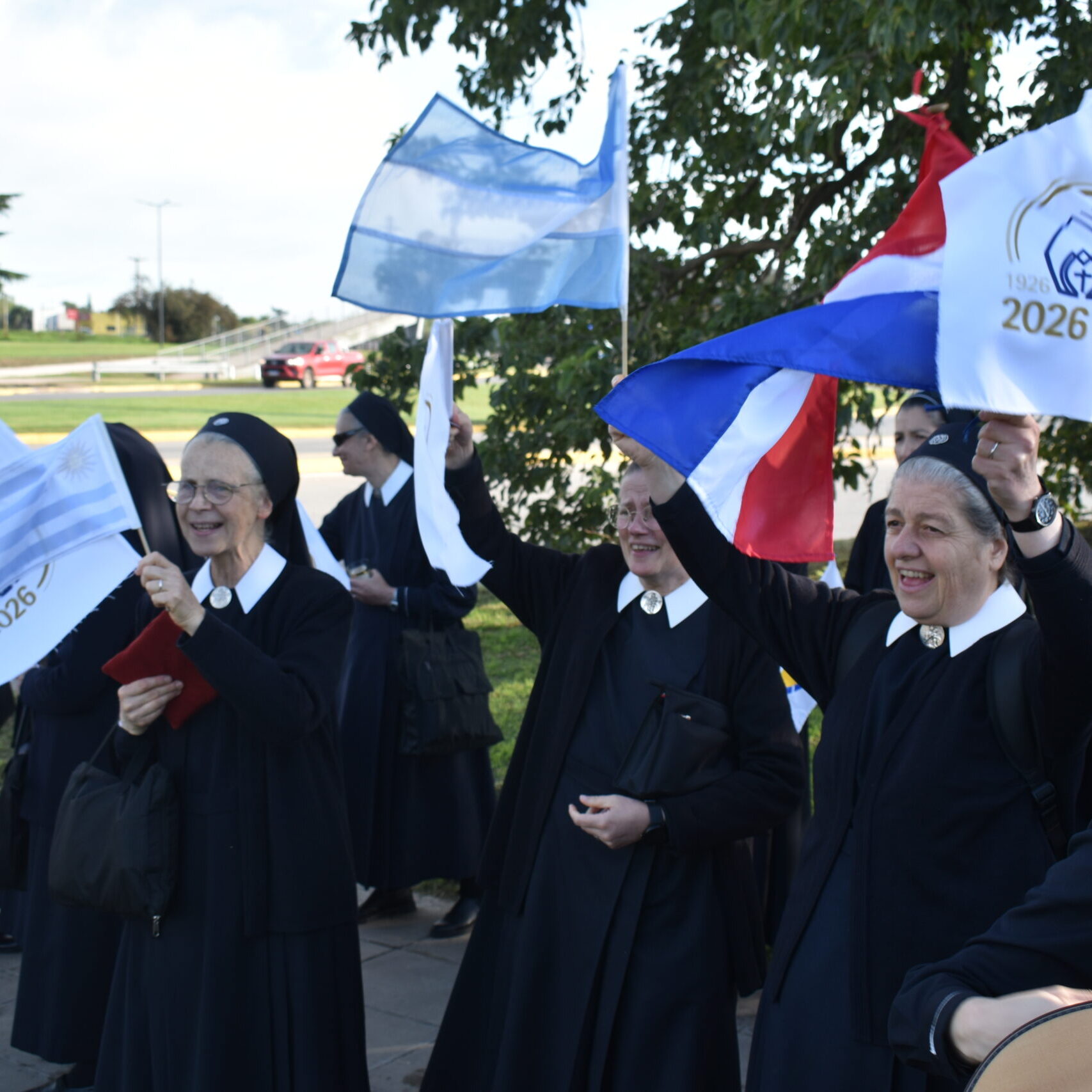
This April 11, on the eve of the anniversary of the consecration of our Father and Founder as a child to the Blessed Virgin, in the octave of Easter, will remain alive in our souls. Mary herself, with her mantle of Luján, with her virginal dress, wished to renew our vocation; she wished to instill in us new courage to continue crossing the Argentine territory, far and wide, to continue being pilgrims “on the move,” bringing her Son to those entrusted to us.
Thus continues to resound on our lips the prayer of our Father and Founder, so dear to all of us:
“Let us reflect your image and walk through life entirely like you, strong and noble, meek and mild, spreading love, peace, and joy. In us, go through our time, make it ready for Christ.”